Archive Page 4

Leadership Today

20140104-225558.jpg

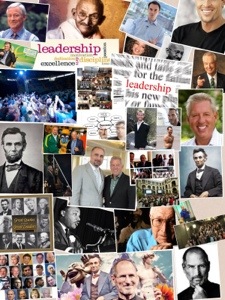
Managers make sure the work gets done; leaders make sure the work gets done differently and effectively. Managers make sure the system is in place. Leaders catch people doing things right.
Managers improve systems, leaders develop people. Both activities are valuable and necessary, but they differ significantly.

“Each of us can look back upon someone who made a great difference in our lives, someone whose wisdom or simple acts of caring made an impression upon us. In all likelihood it was someone who sought no recognition for their deed other than the joy of knowing that, by their hand, another’s life had been made better.” ~ Stephen M. Wolf

Leadership today is either “positional” or “influential”
The biggest challenge today is that 90% of the leaders are “positional” leaders and only 10% are “influential” leaders.

How can we develop true leaders rather than just promoting them to the position? Here are seven characteristics of Influential Leaders:

1. Influential Leaders focus on people and not the profit only

2. Influential Leaders promote creativity and not the corporate traditional ways of doing things only

3. Influential Leaders get people to “willing” to achieve and not to “have to” achieve

4. Influential Leaders help people to feel as partners and not participants

5. Influential Leaders are not about “charismatic command and control persuasion” anymore; it is increasingly about the collaborative and horizontal skills of trust and influence.

6. Influential Leaders are intentional and not accidental

7. Influential Leaders lead from humility and NOT pride

“Leadership is influence, nothing more, nothing less. How do you gain influence from people? You invest in them. How do you invest in them? It starts with giving them time.” ~ John C. Maxwell

Live with passion!
Farshad Asl
2014

20140104-230450.jpg

I Appreciate You!

20131128-084251.jpg

William James, American psychologist and philosopher said: “The deepest principle of human nature is a craving to be appreciated.”

Whatever we do for others, knowing that our efforts have been recognised and appreciated makes the work feel worthwhile. We feel valued. Our fundamental human needs for significance and contribution are being fulfilled. Cicero said that “gratitude is the mother of virtues”. Gratitude is also the sign of a noble soul. Gratitude draws out THE BEST in people.

Gratitude PAYS THE LARGEST DIVIDENS. To give appreciation is one of the best ways to become a servant leader. That’s where everything starts…

Appreciation is so rare but it’s definitely rewarding. I’ve come to the conclusion that around 10% of people have the gift of being grateful and 90% have no interest of even going there. They have no desire of showing their appreciation. This is a common weakness in human personality. Each part of who we are contributes to what makes us unique and valuable and no one should be made to feel invisible. A little bit of gratitude goes a long way.

Practice appreciation by starting with yourself. If you have difficulty openly appreciating others, it’s likely you also find it difficult to appreciate yourself. Take a few moments at the end of the day to ask yourself this simple question: “What can I rightly feel proud of today?” If you are committed to constant self-improvement, you can also ask yourself, “What could I do better tomorrow?” Both questions hold your value. Make yourself more valuable if you want to add value to others. You can’t give what you don’t have.

Who knows what impact your few words can have on another person’s spirit? Who knows what an impact your few words can have on your own! Why not share a link to this article on to those you’ve missed opportunities to encourage in the past with a note of appreciation declaring that you intend to do better in the future? It’s likely to be the best email they get all day! Keep in mind that it’s a universal law of life that what goes around, comes around. So when it comes to encouragement: Give generously.

“And let the peace of God rule in your hearts, to the which also yee are called in one body: and be yee thankful.” ~ Colossians 3:15

“Every man I meet is my superior in some way, In that, I learn of him.” ~Emerson
If that was true of Emerson, isn’t it likely to be a thousand times more true of you and me? Let’s cease thinking of our accomplishments, our wants. Let’s try to figure out the other person’s good points. Then forget flattery. Give honest, sincere appreciation. Be “hearty in your approbation and lavish in your praise,” and people will cherish your words.

Here are different ways to say “THANK YOU”:

1. I appreciate you!

2. Words are inadequate to express my gratitude.

3. I highly appreciate your invaluable contribution.

4. I won’t be able to fully express my heartfelt acknowledgement for your contribution.

5. My appreciation is beyond expression.

And many more ways to show your gratitude and LOVE.

Remember, you can’t lead people without loving them. Show your appreciation and take your life to a whole new level, and with doing that you will take other people with you.

Thank you!

20131128-084829.jpg

The Power Of “Staying Laser Focused”

20131123-101241.jpg

While a lot of people say they’re focused, it’s not really true. They may say they really want to accomplish their goals, but their actions say otherwise. Edison once said, “You and I have eighteen hours a day in which we may do something. You spend that eighteen hours doing a number of different unrelated things. I spend it doing just one thing, and some of my work is bound to amount to something.”

If you like to be OUTSTANDING in ANY field, there is one important rule to observe: “Stay Laser Focused.” Get one thing in your heart, mind and bloodstream. Put side blinders on your eyes so you cannot see all the distractions along the way. Stay focused, put all the steam you’ve got right on the piston head and drive with FULL POWER down the main track. Keep your MIND on what you are DOING.

Ralph Waldo Emerson wrote an essay on this subject entitled “POWER”; “…Concentration is the secret of strength in politics, in war, in trade, in short, in all management of human affairs. One of the high anecdotes of the world is the reply of Newton to the inquiry, “how he had been able to achieve his discoveries?” — “By always intending my mind.”
“….Stick to one business, young man. Stick to your brewery, (he said this to young Buxton,) and you will be the great brewer of London. Be brewer, and banker, and merchant, and manufacturer, and you will soon be in the Gazette.”

A child may be perfectly content with his toy until he sees something that some other child has. The child usually wants everything he sees and drops one thing after another as new attractions are presented. We are very much like children. We want too many things and are not faithful to any one thing. The Bible says, “No man can serve two masters.”
“Keep your eye single” that means to keep just one thing in the FOCUS of your VISION. ” A double-minded man is unstable in all his ways.”

As an entrepreneur I know very well that singleness of purpose and unwearied will give power greater than DYNAMITE. This is a PRINCIPLE to success, I didn’t invent it…and I can’t do anything about it, ITS A LAW! Let’s look at Matthew 6:21: “Where your treasure is, there will your heart be also” THIS IS A LAW. If we are going to succeed, we’d better have our hearts and our investments and our efforts and our attention in our BUSINESS! It’s amazing how Many capable entrepreneurs fail just because they “scatter their shot.”

This is so important guys, there are many people who are continually stumbling over a number of little diversions and spoiling their chances to succeed. They are always starting and stopping, always on the detours or sidelines, always trying to save few dollars with doing other things. A businessman should think like a businessman. An entrepreneur should think and act like an entrepreneur. A leader should think and lead like a leader. You should not lose this magnificent opportunity by turning off the fire of your enthusiasm and getting distracted by doing minor things. Stay Laser Focused and increase your EFFECTIVENESS and your influence.

Unknown Painter once said; “if a man has failed, you will find he has dreamed instead of working. There is no way to success in our art, but to take off your coat, grind paint, and work like a digger on the railroad, all day and every day.”

Stay Focused!

20131123-114518.jpg

Organizational Culture and Your Leadership:

20131026-082441.jpg

Organizational Culture According to Business Dictionary:

“The values and behaviors that contribute to the unique social and psychological environment of an organization.

Organizational culture includes an organization’s expectations, experiences, philosophy, and values that hold it together, and is expressed in its self-image, inner workings, interactions with the outside world, and future expectations. It is based on shared attitudes, beliefs, customs, and written and unwritten rules that have been developed over time and are considered valid. Also called corporate culture, it’s shown in
(1) the ways the organization conducts its business, treats its employees, customers, and the wider community,
(2) the extent to which freedom is allowed in decision making, developing new ideas, and personal expression,
(3) how power and information flow through its hierarchy, and
(4) how committed employees are towards collective objectives.

It affects the organization’s productivity and performance, and provides guidelines on customer care and service, product quality and safety, attendance and punctuality, and concern for the environment. It also extends to production-methods, marketing and advertising practices, and to new product creation. Organizational culture is unique for every organization and one of the hardest things to change.”

As a leader you can’t delegate the culture building decisions. Leaders need to be great delegators, but not when it comes to organizational culture. Leaders own, create and shape culture.

Why having a solid culture in the organization is so important?

A) Culture is the glue that holds everyone together; it helps the retention. People don’t leave the company they leave the leader.
B) Culture is like the oxygen we breathe, we don’t know the real value of it unless we are lacking it.
C) Culture is as important as the vision for the organization, maybe even more important. “Culture can have the vision for lunch”…. We can’t achieve a big vision without a solid culture.
D) Culture creates collaboration, creativity (a dynamic, entrepreneurial, creative environment) , and competition.
E) Culture can create trust and communication within a company, it builds stronger teams and accountability.

In order to build a solid culture the leader should communicate his values, strategy, goals, and expectations frequently. Leader can’t just focus on the good; he should be upfront about the bad, too (transparency).

Remember changing an entrenched culture is the toughest task you will face. To do so I like to share few points that have worked for me:

1. Build Relationship: You must win the HEARTS and minds of the people you work with, and that takes both cunning and persuasion.

2. Communicate: People must have some understanding of WHY the change in strategy or in culture is needed. “People hear what they want to hear. Is your vision written down not only on paper but also on their hearts?”

3. Motivation: Ultimately, team members have to WANT to make the change.

4. Consistency: This is KEY to a successful change.
Sometimes you will get shot down before you stand up, that’s completely understandable. Remember, this is a process and not an event.

5. Create a Growth Environment: “Growth thrives in conducive surroundings”.
Communication changes the culture but GROWTH creates the healthy culture that you always wanted.

Live with passion!

20131026-083805.jpg

Leaders Never Quit!

20131001-222421.jpg
Leaders Never Quit…

Abraham Lincoln Didn’t Quit
Probably the greatest example of persistence is Abraham Lincoln. If you want to learn about somebody who didn’t quit, look no further.
Born into poverty, Lincoln was faced with defeat throughout his life. He lost eight elections, twice failed in business and suffered a nervous breakdown.
He could have quit many times – but he didn’t and because he didn’t quit, he became one of the greatest presidents in the history of our country.

Lincoln was a champion and he never gave up. Here is a sketch of Lincoln’s road to the White House:
• 1816 His family was forced out of their home. He had to work to support them.
• 1818 His mother died.
• 1831 Failed in business.
• 1832 Ran for state legislature – lost.
• l832 Also lost his job – wanted to go to law school but couldn’t get in.
• 1833 Borrowed some money from a friend to begin a business and by the end of the year he was bankrupt. He spent the next 17 years of his life paying off this debt.
• 1834 Ran for state legislature again – won.
• 1835 Was engaged to be married, sweetheart died and his heart was broken.
• 1836 Had a total nervous breakdown and was in bed for six months.
• 1838 Sought to become speaker of the state legislature – defeated.
• 1840 Sought to become elector – defeated.
• 1843 Ran for Congress – lost.
• 1846 Ran for Congress again – this time he won – went to Washington and did a good job.
• 1848 Ran for re-election to Congress – lost.
• 1849 Sought the job of land officer in his home state – rejected.
• 1854 Ran for Senate of the United States – lost.
• 1856 Sought the Vice-Presidential nomination at his party’s national convention – get less than 100 votes.
• 1858 Ran for U.S. Senate again – again he lost.
• 1860 Elected president of the United States.

“Ever tried. Ever failed. No matter. Try Again. Fail again. Fail better.” – Samuel Beckett

Fail Forward with NO EXCUSES in MIND!

20131001-223204.jpg

Leadership Lessons from 9/11

20130911-215620.jpg

The fight or flight instinct is one of our most basic survival tools. Everyone was running on 9/11. Most ran away from trouble. The heroes ran toward it. And the leaders helped others run in the most appropriate direction.

What does 9/11 teach us about leadership? I’ve found five compelling things:

1) Servant Leadership: The incredible selfless courage of first group of those responders to this unforgettable tragedy. They rushed into the twin towers even they knew they were risking their own lives.

2) Leaders must be willing to make sacrifices: They risked their lives in order to save the lives of others.

3) Leaders inspire by ACTION: Their noble acts commanded the admiration of the nation.

4) Great leaders put the needs of others first.

5) Leaders face unknown crises: Leaders lead by example in any circumstances. They clearly understand their core values and make the right decision based on those values.

We owe it to all those who died or lost loved ones that day, to be THE BEST leaders that we can be. The lesson is that we need all sorts of leaders: those that will lead others into harm’s way, those that will lead others out of harm’s way, and those that will lead the leaders. Whichever way you choose to lead, remember that everything communicates: what you say, what you do, what you don’t say, what you don’t do, and which way you run.

Live with passion!

~Farshad Asl

20130911-215730.jpg

Leadership and Hope!

20130907-222444.jpg

Proverbs 24:14 Know that wisdom is such to your soul; if you find it, there will be a future, and your hope will not be cut off.

What is the meaning of HOPE for a true leader?
“A confident expectation and desire for something good in the future”
Hope for a leader is not only desires something good for the future; it expects it to happen. And it not only expects it to happen; it is confident that it will happen. There is a moral certainty that the good we expect and desire will be done.

Now what does “the full assurance of hope” mean for a leader? It means hope which is fully assured. Hope which is confident. Hope that has moral certainty in it. It is not finger-crossing hope.
It means that it’s going to happen!

Vineet Bansal has this nice poem about hope:

Hope is bright shining light which keeps darkness at the bay
Hope is gentle cold breeze on a hot summer day

Hope is to remain positive when going gets tough
hope is seeking more when others think u had enough

What hope means

Hope is dreaming of tommorow
Hope is simmering under sorrow

Hope is sparkles when tears in our eyes
Hope is a beautiful thing & beutiful things never dies

What hope means

Hope is as light as a feather
Hope keeps all of us together

Hope is ubiquitous and free of cost
hope is the last thing ever lost…..

Great leaders always have HOPE and they give HOPE… One of my favorite quotes about leadership is from Napoleon: “Leaders are dealers in hope.”

Whoever you are, whatever the pattern of your life, whatever your roles, be a dealer in hope and start trading now!

Live with passion…and always live by HOPE!

20130907-222607.jpg

No Excuse Leadership!

20130902-151721.jpg

Leaders with excuses can quickly become the lid of the organization.

As the saying goes, the definition of insanity is doing the same thing over and over again while expecting different results. Many leaders understand that they need to change, why they need to change, and even how and in what direction they need to change. But they have all the excuses in the world about why they can’t really do things differently. Excuses, therefore, drag leaders toward failure and mediocrity—toward an insane pattern of behavior in which the same mistakes get made again and again. As a leader, your job is to counteract the tendency to let excuses substitute for action. Or don’t, and you and your team can trade excuses about why you and your team failed.

No Excuse Leaders don’t offer, nor do they accept excuses. No Excuse leadership demands the character to demonstrate personal responsibility for one’s actions, and the courage to hold others accountable for theirs. Excuses attempt to conceal personal or professional insecurities, laziness, and/or lack of ability. They accomplish nothing but to distract, dilute, and deceive. It was Benjamin Franklin who said, “He that is good for making excuses is seldom good for anything else.”

One of my favorite quotes is by Edward R. Murrow; “Difficulty is the excuse history never accepts.” The fastest way to lose respect as a leader is to focus on optics over ethics. If you’re more concerned about political fallout than solving the problem, you have failed as a leader. Even though responsibility for decisions defaults to the leader, responsibility should be a thing of design, not default. It should be readily accepted and not easily denied – this is real leadership…No Excuse Leadership!
Leaders have no excuses, and break through to solutions and overcome barriers without complaining or relying on an excuse to protect themselves. Here are eleven key qualities of character that collectively define what it means to be a No Excuses Leader:

They are Persistent.
They are Humble.
They are Focused.
They are Driven.
They are Instinctual.
They are Honest.
They are Selfless.
They are Confident.
They are Dutiful.
They are Determined.
They have NO EXCUSES in life…They understand that every challenge in life can be a great opportunity to excel!

Live with passion!

20130902-152308.jpg

Transformational vs. Transactional Leadership

There are two types of organisational leaders – the transactional and the transformational.

Transactional Leadership: Transactional leaders are the ones who work with the safety of the status quo. Transactional leadership is based more on “exchanges” between the leader and follower, in which followers are rewarded for meeting specific goals or performance criteria.
A transactional leadership style is appropriate in many settings and may support adherence to practice standards but not necessarily openness to innovation. A transformational leadership style creates a vision and inspires subordinates to strive beyond required expectations, whereas transactional leadership focuses more on extrinsic motivation for the performance of job tasks.

Transformational Leadership: Transformational leaders strive with all their might to change the existing order of things. They are the ones who bring about major, positive change for a group, organization or society. According to Sullivan & Decker (1997), the transformational leader is not concerned with the status quo, rather with “effecting revolutionary change in organizations and human service” (as cited in Trott & Windsor, 1999). Bass (1996) defined transformational leadership as the ability of a leader to motivate employees to surpass their own individual aspirations for the greater good of the organization. Burns (1978) depicted the transformational leader as a morally responsible manager who focuses on developing the moral maturity, values, and standards of his or her subordinates and strengthening their devotion to serve the well-being of others, their organization, and society beyond self-interest (as cited in Olsen & Johnsen, 2006).

Live with passion!

20130816-222849.jpg

Adversity causes some men to break; others to break records.

“Life without limbs? Or life without limits?”

Imagine being born without arms. No arms to wrap around someone, no hands to experience touch, or to hold another hand with. Or what about being born without legs? Having no ability to dance, walk, run, or even stand on two feet. Now put both of those scenarios together: no arms and no legs. What would you do? How would that effect your everyday life?

Nick Vujicic… Born in 1982 in Melbourne, Australia, without any medical explanation or warning, Nicholas Vujicic (pronounced Voy-a-chich) came into the world with neither arms nor legs. Having had an uneventful pregnancy and no family history to expect this condition, imagine the shock his parents felt when they saw their first born, brand new baby boy, only to find he was what the world would consider imperfect and abnormal. A limbless son was not what nurse Dushka Vujicic, and her husband Pastor Borris Vujicic had been expecting. How would their son live a normal happy life? What could he ever do or become when living with what the world would see as such a massive disability? Little did they know that this beautiful limbless baby would one day be someone who would inspire and motivate people from all walks of life, touching lives all over the world.

Nick Vujicic struggled mentally and emotionally as well as physically when he was a child. However, with strong willpower, he finally came to terms with his disability. Nick said in one of his interviews: “I found the purpose of my existence, and also the purpose of my circumstance. There’s a purpose for why you’re in the fire.” Nick wholeheartedly believes that there is a purpose in each of the struggles we each encounter in our lives, and that our attitude towards those struggles, along with our faith and trust in the Lord can be the keys to overcoming the challenges we face.

By using his own actions, Vujicic showed what it means to “never give up.” The news of his engagement must be yet another example of what it means that his life is truly without limits.

In 2010, Vujicic published the book “Life Without Limits”, in which he tells how he overcame his disability to live not just independently but a rich, fulfilling life, becoming a model for anyone seeking true happiness.

“Attitude Is Everything And Self Perception Determines Direction”

20130728-085015.jpg

Today, on August 12, 2013 I had the opportunity to meet with Nick. Such a great experience:

Live with passion!

Farshad Asl

20130812-213904.jpg